You Are The Desk
The player is the agency: choosing contracts, doctrine, gear, partners, and how much heat the file can tolerate.
AGENCY COMMAND // SURVIVAL INTELLIGENCE ONLINE
A spoofishly serious tactical spy roguelike where you command the Agency, program operatives with readable doctrine, watch the board fight back, and let the case file remember exactly how the operation went wrong.
Brief the op, pick the kit, and send the right operative into the wrong room.
Doctrine explains what the agent will do and why the runner-up rule lost.
Autoplay now patches up, breaks sight, clears contact, and keeps moving.
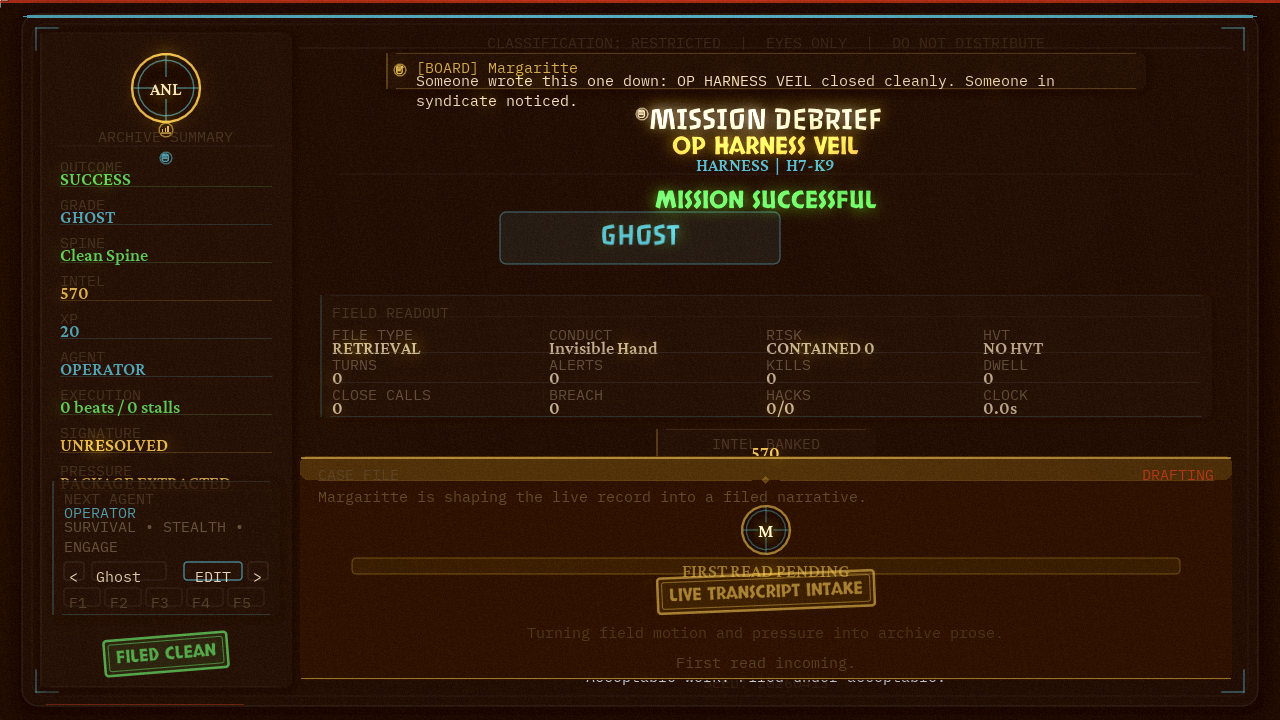
The archive turns the run into evidence, not a throwaway score screen.
Always Never Live is being rebuilt around the full playable spine: Agency command, field doctrine, tactical stealth, survival-minded autoplay, villain interference, extraction pressure, and an AI-written record of the mess.
The player is the agency: choosing contracts, doctrine, gear, partners, and how much heat the file can tolerate.
Agents do not just follow a route. They explain decisions, preserve the objective, and try very hard not to become paperwork.
Villains author pressure events, themed trouble, and dossier-visible behavior that the case file can name afterward.
Enemy intent, route language, action beats, combat outcomes, and field tokens are built to be watched, not decoded.
It is not just "go pick up a thing." The package creates route pressure, optional side-file temptation, custody risk, and a clean or partial debrief handoff.
The first turns expose stealth, patrol intent, item choice, and extraction planning.
The objective stays visible at gameplay scale and changes what the room can cost you.
Extraction does not end in a stat dump. It lands in the case-file machine.
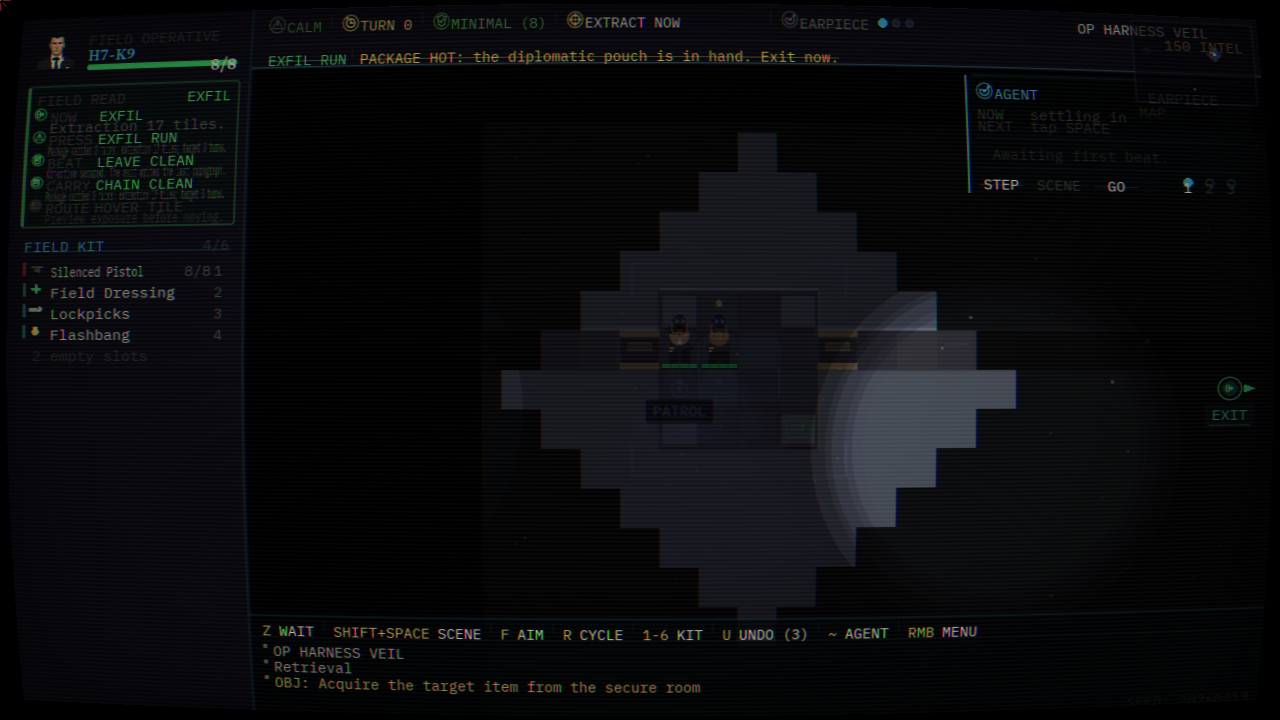
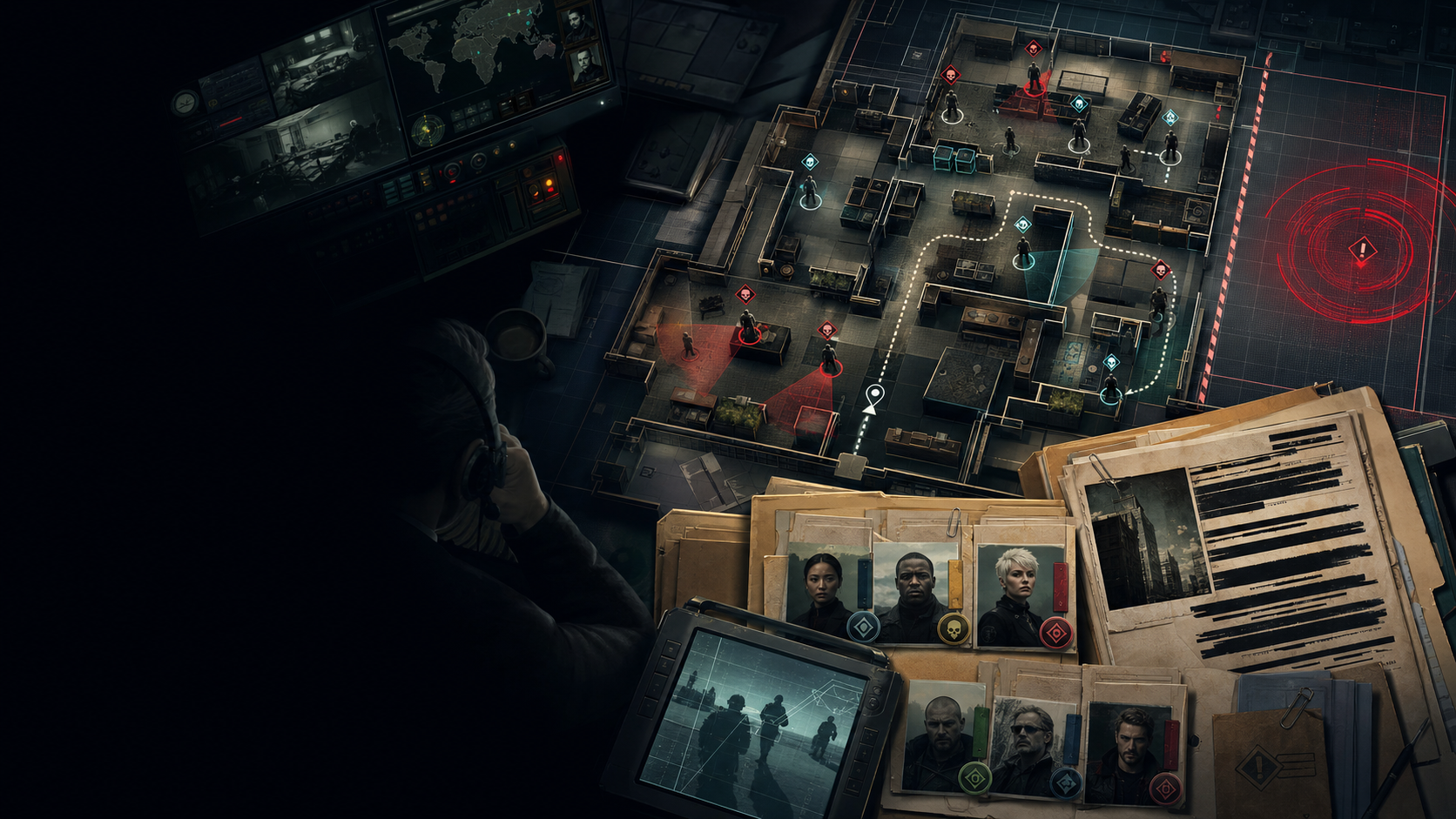
A lot of runs will be watched, delegated, or half-automated. That means the agent cannot act like a script wandering toward a marker. The operative has to heal, break contact, use cover, cut sightlines, protect the package, and keep the audience clear on why the decision happened.
Medical gear resolves as real survival, not a blocked menu command.
Flee logic now retries safe tiles and scores cover, darkness, cameras, and enemy sight.
Once the package is secured, the agent resists pointless detours and pushes the exit.
The site and case file can sell the run because the board tells a legible story.
The old vibe said prototype. The new direction says filed operation: strong avatars, readable field tokens, hard-edged UI, villain signatures, and dossier art that belongs to the same world as the mission board.
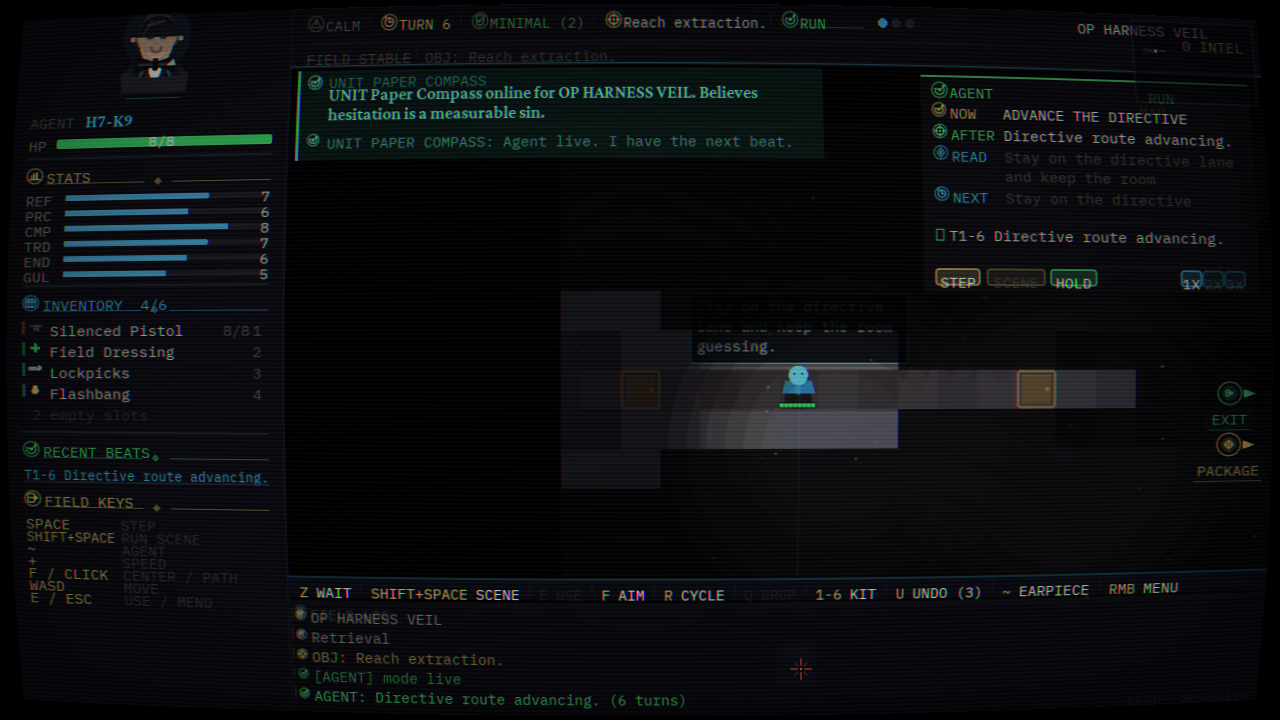
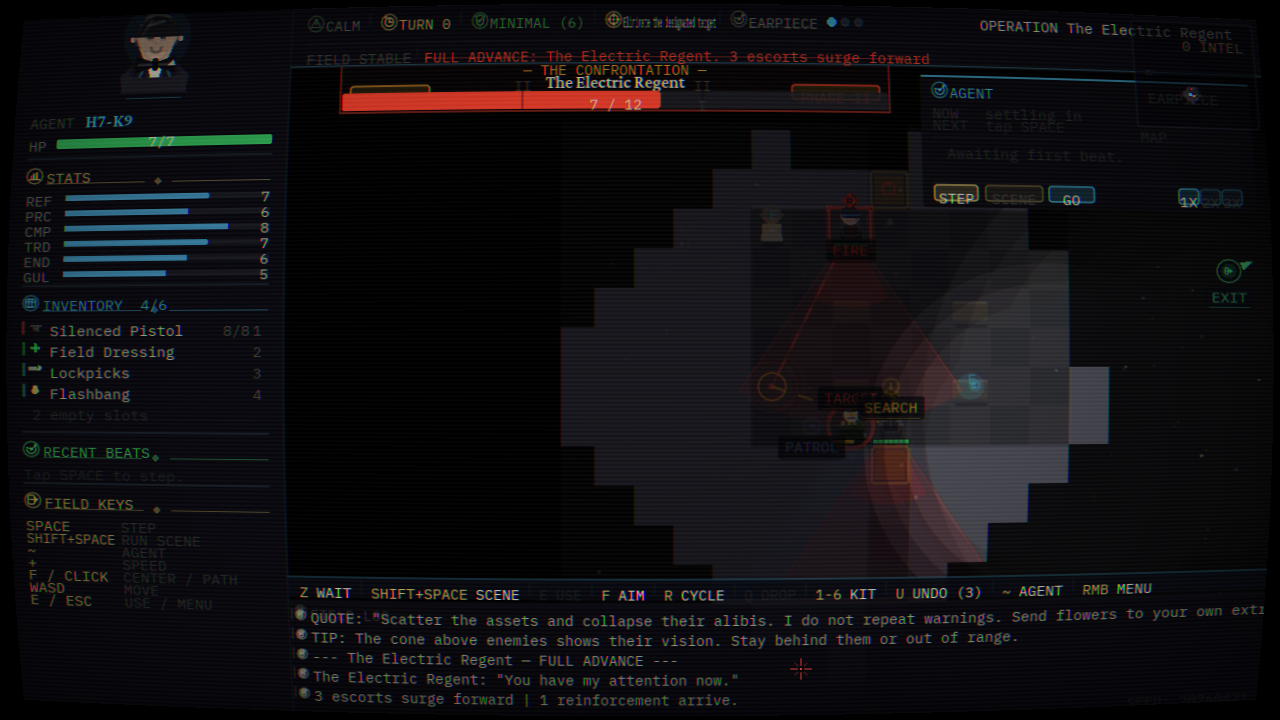
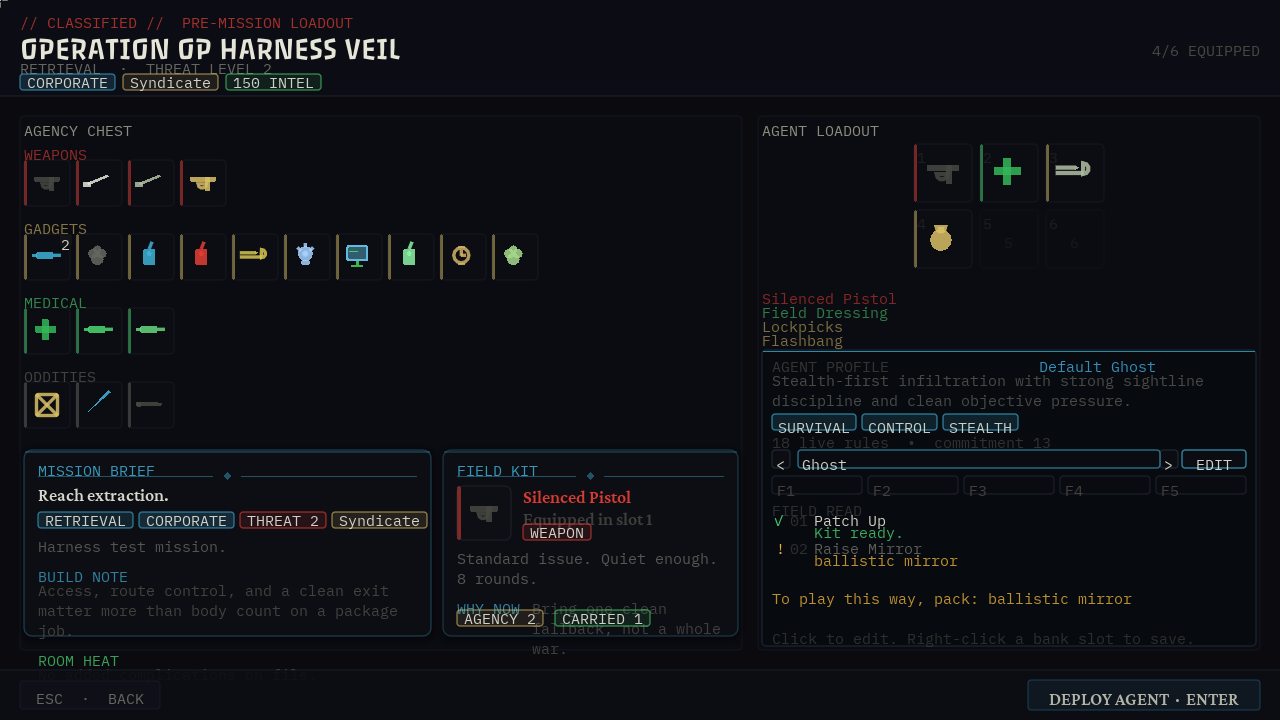
The field kit, agent profile, risk read, and contract now feel like one ritual.
The player sees what the operative intends to do, why, and what rule nearly fired instead.
Hostile identity reaches the room through escorts, comms, pressure events, and combat tells.
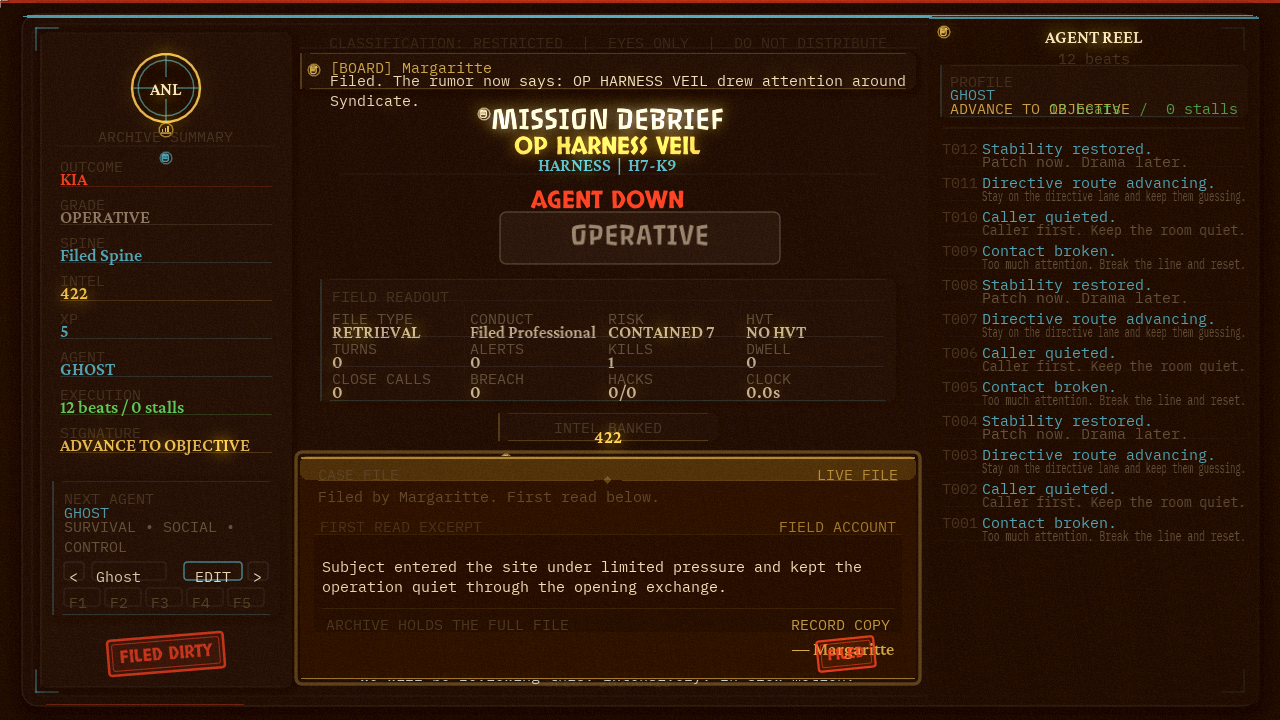
The run becomes an operational record with profile, doctrine, pressure, and evidence intact.
Shared runs are not throwaway telemetry. They are classified documents, readable failures, and proof that the simulation remembers the interesting part.
The first mission path is being tuned end to end until the whole loop lands cleanly.
Automation reads as field judgment: patch up, break sight, protect the package, extract.
Portrait, dossier, token, role marker, and faction pressure now point at the same identity.
The antagonist is not just a file portrait. They interfere, escalate, and leave evidence.
Hits, grazes, fumbles, cover saves, suppression, and noise all read immediately and become mission memory.
The debrief can name the package, the hesitation, the item, the rule, and the bad decision.
"A good operation is legible. A bad operation is still evidence. Autoplay merely determines how much of it arrives breathing."