You are not just moving an agent. You are running the Agency.
Always Never Live is an agency-scale tactical stealth roguelike about briefing a spy operation, programming field doctrine, watching an operative survive a hostile board, and then reading the agency's official version of what happened.
The tone is dry, bureaucratic, and slightly absurd, but the tactics are serious: move, wait, use gear, read enemy intent, control noise, steal the package, preserve the operative, and get out clean if the building permits the paperwork.
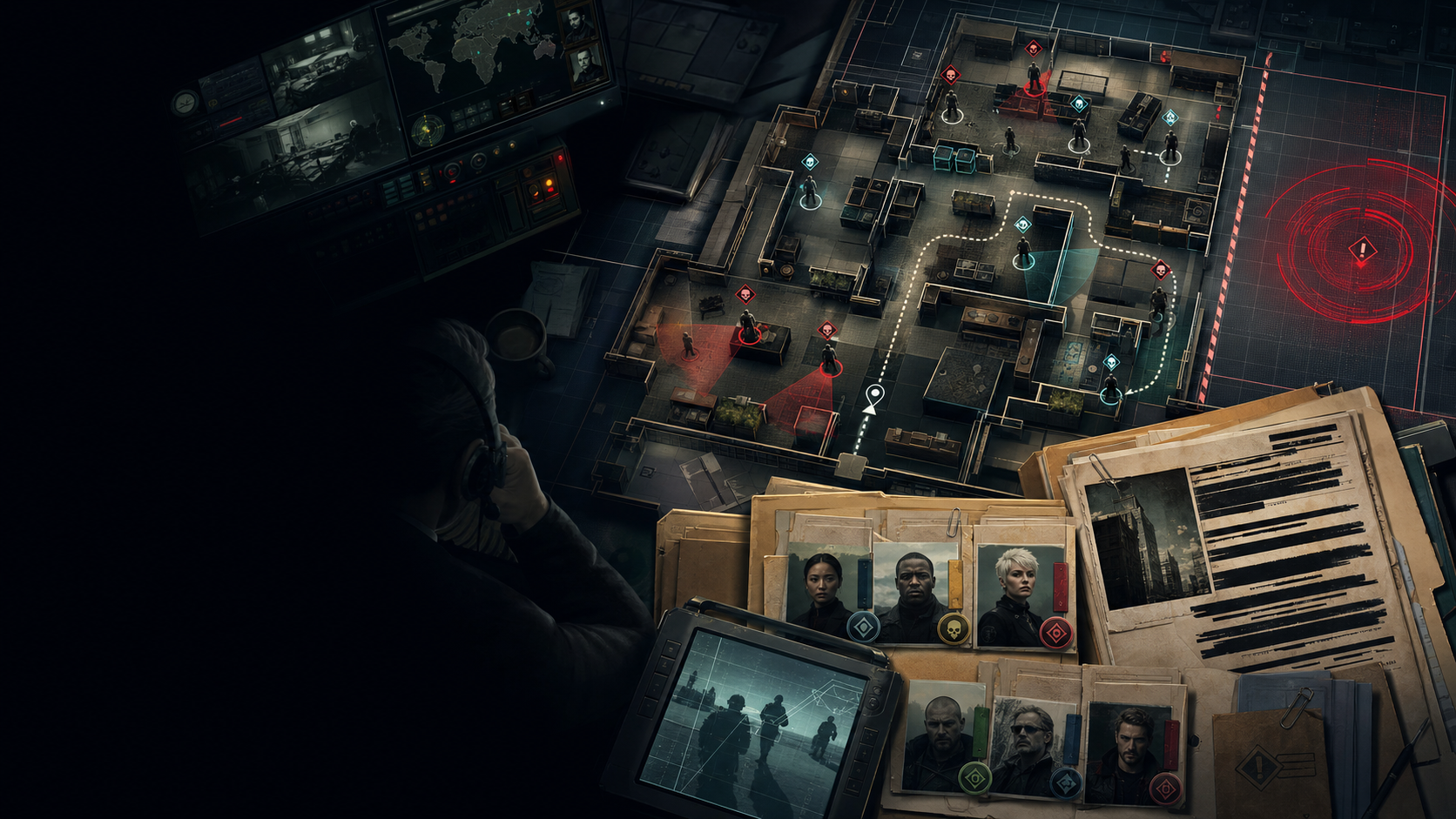
THE GOLDEN RUN SPINE
READ THE CONTRACT
The board explains the mission type, target, threat, route pressure, side risk, and why HQ is pretending this was your idea.
SET THE DOCTRINE
Agent programming is framed as spy doctrine: what to do when compromised, when the package is visible, when an ally is exposed, when extraction opens, and when survival becomes the mission.
WORK THE ROOM
Turn-based stealth exposes enemy intent, patrol pressure, cover relation, noise, combat risk, and last-action consequences without smothering the player in admin.
LIFT THE PACKAGE
Retrieval is the canonical slice: optional side files, custody pressure, package-to-exit lag, and a clear clean or partial extraction path.
FILE THE CASE
The chronicler carries combat outcomes, hesitation, item usage, villain pressure, doctrine behavior, and extraction quality into the final document.
WHAT IS BEING OVERHAULED
THE ROOM IS PART OF THE ENEMY
Confrontations are being staged as spy scenes, not bigger health bars.
- Villain-authored pressure changes patrols, comms, doors, alarms, and objective complications.
- Themed henchmen carry faction identity into the mission instead of arriving as generic trouble.
- Combat tells make dangerous actors readable before they ruin the paperwork.
- Case-file memory records what the villain actually did, then lets the brief say so.
AUTOPLAY HAS TO BE WORTH WATCHING
Some players will hand the operation to doctrine and watch. That is not a side feature. It is one of the game's strongest promises: the agent should behave like a trained field asset, not a cursor with a destination.
Visible enemies, cameras, targeters, cover, darkness, alert state, and health all feed the emergency decision.
Medical supplies resolve directly, partners can patch themselves, and survival beats become legible action.
Once custody is secured, doctrine stops indulging side spirals unless danger is immediate.
THE NEW VISUAL STANDARD
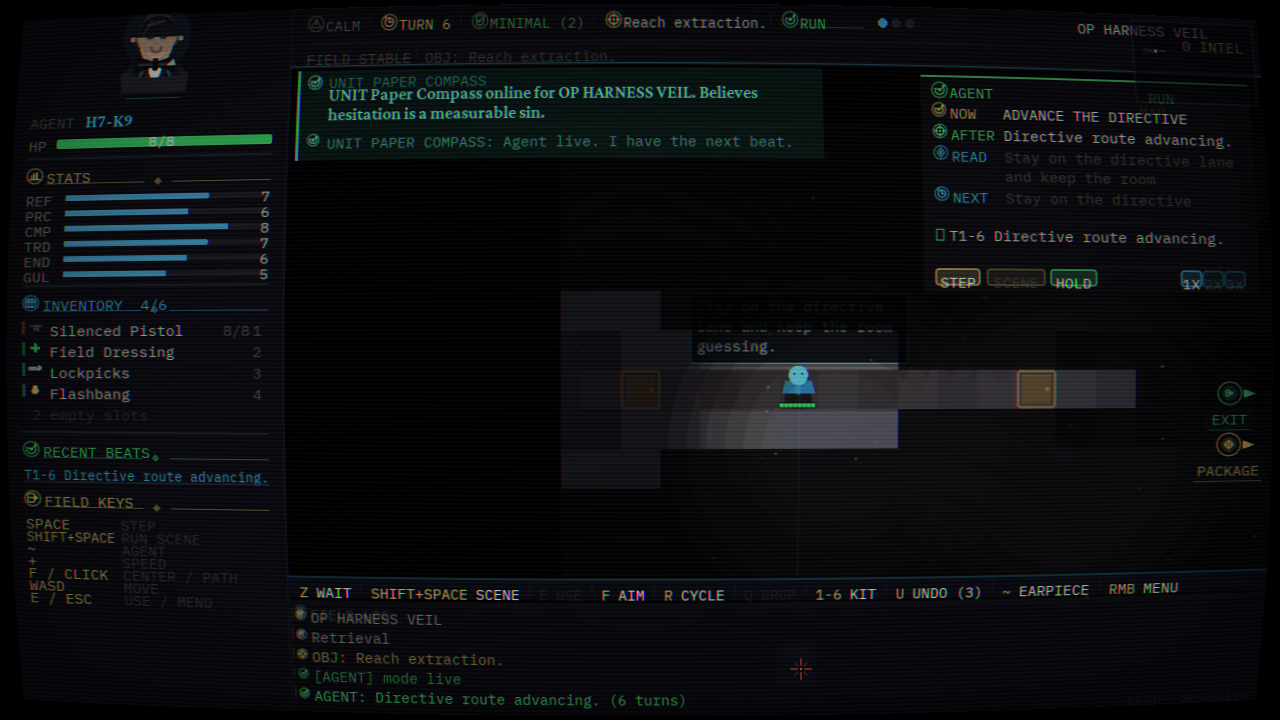
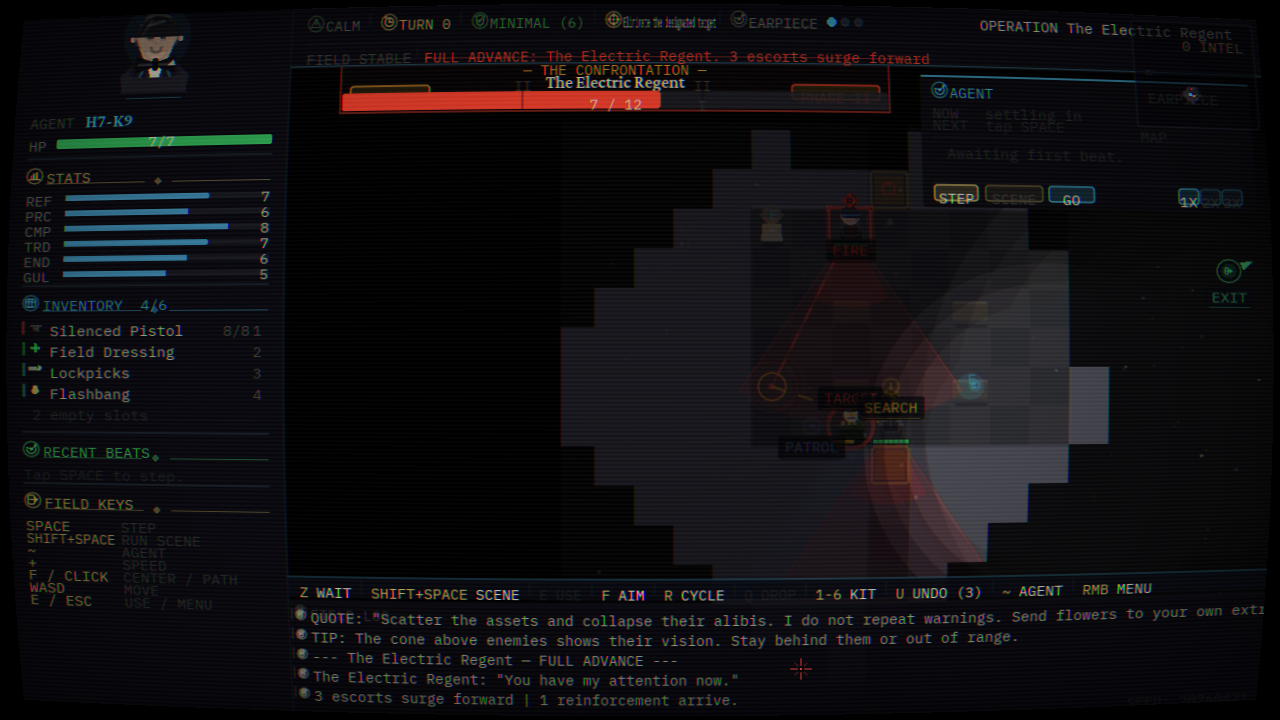
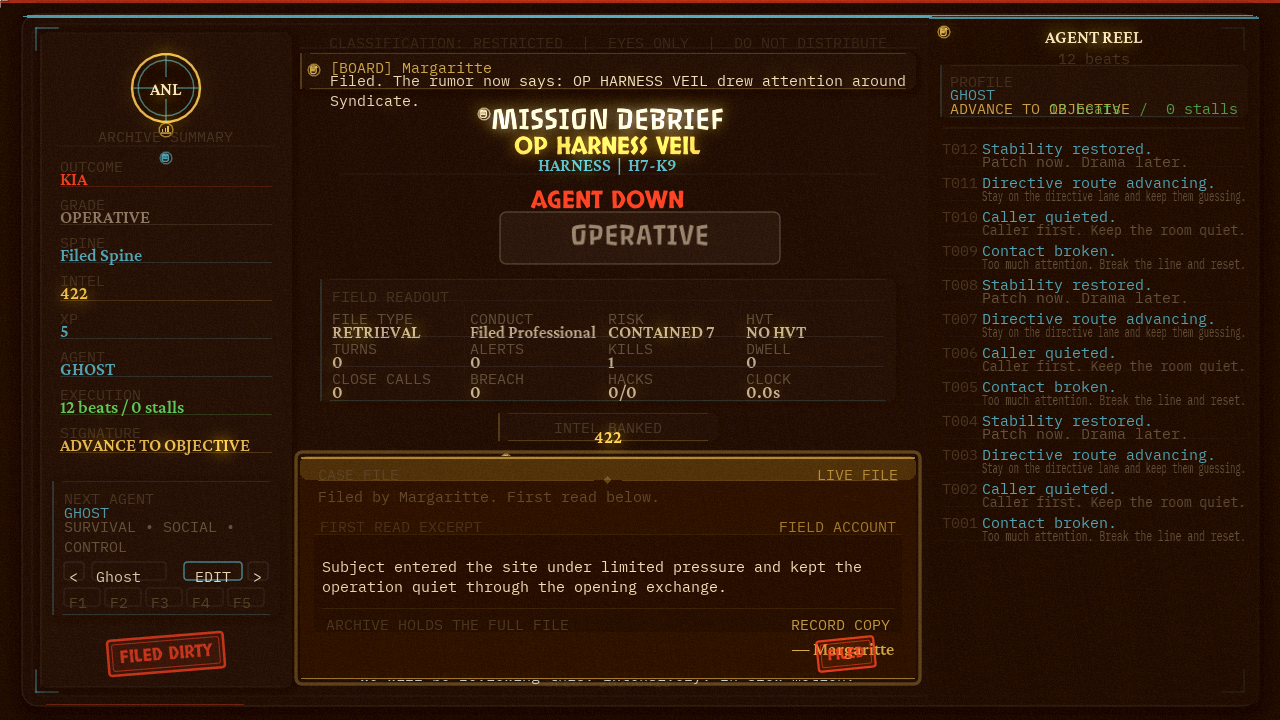
READABLE OPERATIVES
THE FIRST PLAYABLE SLICE IS THE PROMISE
Brief the op. Program the agent. Lift the package. Survive the villain. Read the file.